I have kept a journal for years. It is one of the most valuable things I do, and it has been for a long time. This is not a story about fixing that.
It started as a small curiosity. Somewhere in an ordinary stretch of work, I got interested in whether I could go deeper into my own writing. Not write more of it. Read it more closely. Could I build something that takes what I have already put down and reads it back to me, far enough to surface the limitations and the mental blocks I cannot see from inside a single entry? Could that make the next session sharper, more honest? It seemed like an interesting thing to try, so I tried it.
The first piece is small. Before I sit down to write, the system has already read the last several days for me. It opens on what was unresolved. A thread I left hanging. Something I circled without naming. I am not starting on a blank page. I am picking up a conversation.
The loop
The mechanism is a loop, and it is almost too simple to call architecture.
Each night I write. The system reads what I wrote and pulls one thing out of it. Not the entry. A read of the entry. An insight. It files that next to the day. The next night, that insight, and the handful before it, are the context I open on. Today's read becomes tomorrow's starting point. The loop closes on itself, daily.
The part I find interesting is what comes back. It is not the same text I wrote, handed back for review. It is a reading of it. A short interpretation the system drew from the entry, waiting for me before I write the next one. The journal ends up in a kind of conversation with itself, and some nights I am mostly there to listen.
Why the graph matters
The next thing I got curious about was the graph.
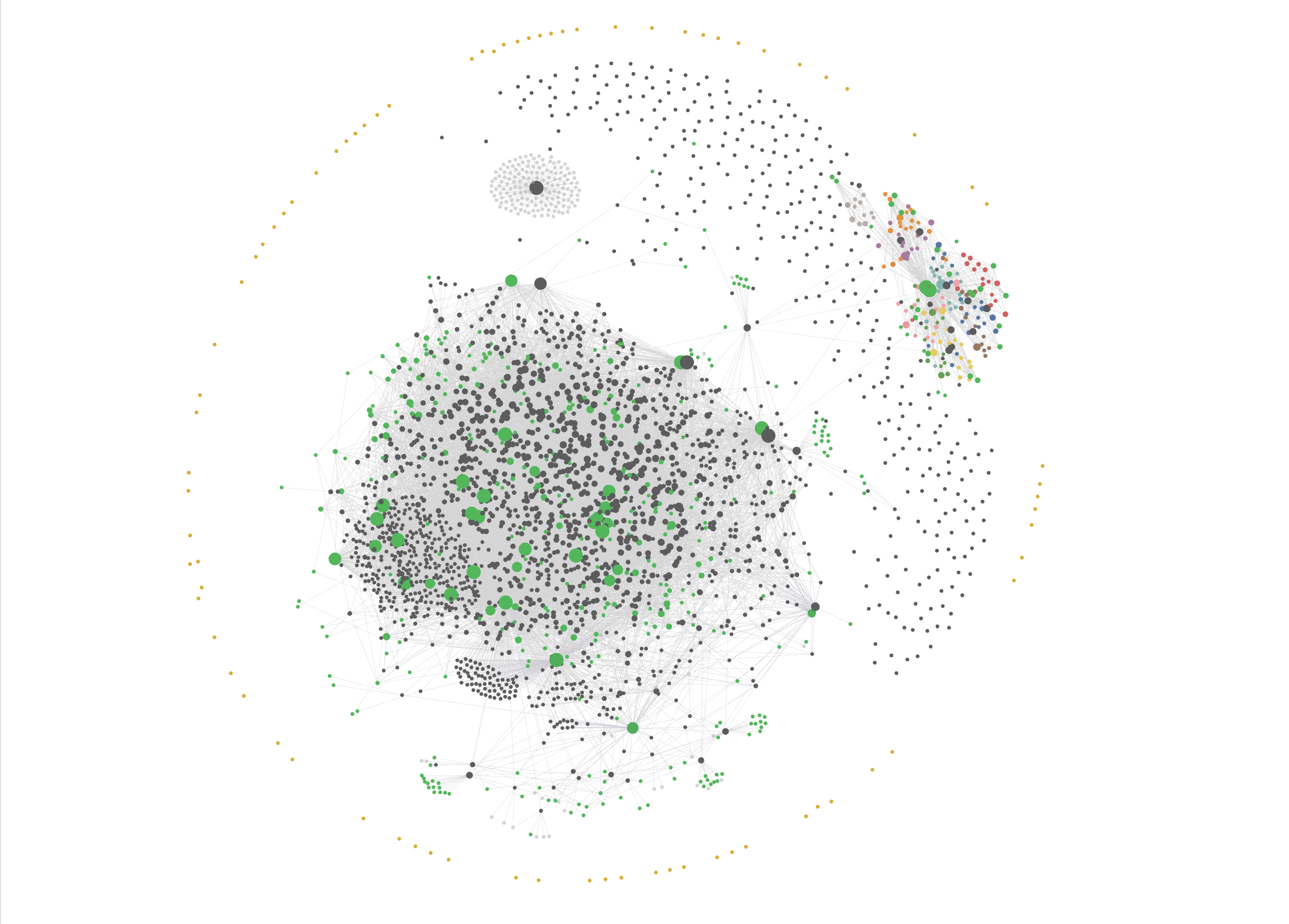
A journal in one long file hides its own structure. You cannot see that the same lesson has shown up four times, because the four times are six weeks apart in a scroll. Put the same material in a vault where every note can link to every other, and the structure surfaces. An insight connects to a lesson. A lesson connects to a decision. A decision connects to the project it touched. The connections were always there. The graph is just what makes them visible.
I keep the record in one place and the graph in another. One holds the truth of what happened. The other shows the shape of it. None of the parts are exotic, which is the point. The idea is the loop, not the stack.
Three off-the-shelf parts, one loop
- Obsidian. A local folder of plain-text notes that links to itself. This is the graph.
- Notion. Where the day and its derived insight get filed. This is the record.
- Claude Code. The agent that reads the recent insights, sits with me through the entry, and writes the next insight back. This is the reader.
That is the whole instrument. I did not build a journaling app. I wired three things I already used into a loop and let them read me.
The atlas
The daily loop reads one entry at a time. The next thing I wondered was what would happen if I pointed the same curiosity at everything I had ever written, not just the journal.
The journal is not the only place I think anymore. There are long conversations with Claude on the web. There are sessions in the terminal where the building actually happens. Three modes, three records, all of it text. I pulled all three into one vault and let a reader run the whole corpus at once. Three years of it. Around twelve hundred entries.
It does not summarize. It draws an atlas. The vault opens onto five numbered sections, 01 through 05, each one a different question I can put to myself.
Five ways into three years of thinking
- Themes. The concepts I keep returning to. Where my attention actually goes.
- Tensions. Where my read on something has flipped over time. Logged as a win one season, a mistake the next.
- Echoes. The same idea showing up across all three sources at once. The journal, the chats, and the terminal agreeing.
- Patterns. Repeated shapes of how I think. The same stance and mood recurring around the same kind of work.
- People. The names that recur, and where they show up across the years.
The two I did not expect to lean on are 02 Tensions and 03 Echoes. A tension is where the thinking is still alive, because a contradiction I have not resolved is a question I am still inside. An echo is a through-line. When an idea shows up in the journal and the chats and the terminal, it is not a passing interest. It is something I care about, proven by the fact that it follows me across every way I think.
This is a personal archive, so the lenses that cut deepest stay private. What is shareable is the method. Tagged text, a handful of derived views, and a map of how one person actually thinks, drawn from the record instead of from memory.
What it gave me
None of this took much building. The parts are off the shelf, and the moving idea is small. Read the writing back. Go one layer deeper than the entry. Look at the shape across time that I cannot see from inside a single night.
What it changed was the writing itself. The sessions got more intense, because I walk in already holding a thread, already sitting with a contradiction I have not settled. The journal was always the valuable part. This just gave me a way to sit closer to it.